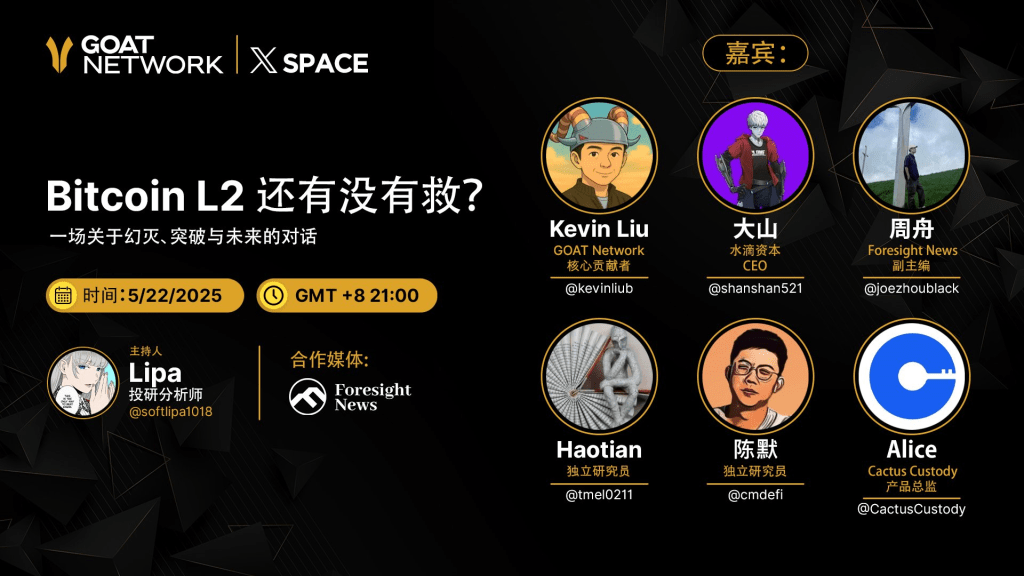
On May 23, Bitcoin Pizza Day, an AMA brought together project founders, investors, researchers, and media to explore the state, challenges, and future of the Bitcoin Layer 2 (BTC L2) ecosystem. This article summarizes key insights and outlines the path forward.
BTC L2: Growth Amid Misconceptions
Rapid Growth, Misaligned Perceptions
The BTC L2 ecosystem has expanded significantly. According to DefiLlama, total value locked (TVL) grew by 1500 percent year-on-year, rising from USD 300 million in early 2024 to USD 4.8 billion by April 2025. Projects like Stacks, Lightning Network, and Rootstock have attracted significant capital, with their tokens now listed on exchanges such as Binance and OKX.
Despite this, concerns about BTC L2’s reliability and activity persist. Much of the scepticism stems from low retail participation. Glassnode data indicate that retail BTC holdings decreased by approximately 200,000 in 2024, while institutional holdings increased to 65 percent. Institutions are drawn to the low-risk, long-term value that BTC L2 offers, while retail users face barriers due to technical complexity and unclear incentives.
Bitcoin’s Consensus Model: A Strategic Advantage
Built on Bitcoin’s decentralised, censorship-resistant consensus, BTC L2 inherits a trustless, community-driven foundation. Speakers highlighted that this resilience gives it an edge in institutional markets where stability and credibility matter most.
Key Challenges Facing BTC L2
Undefined Concepts, Lack of Standards
BTC L2 lacks a standard definition and technical framework. Early narratives, such as Ordinals and Runes, experienced brief hype but quickly faded. Existing solutions, such as the Lightning Network (state channels), Stacks (sidechains), and RGB (client-side validation), reflect a fragmented landscape. This lack of alignment weakens collective progress.
Security and Trust Deficiencies
Many protocols, including Rootstock, depend on multisig bridges, which introduce centralization risks and weaken Bitcoin’s security guarantees. Users worry about asset exit safety and protocol complexity. Without the ability to assess risks, user confidence remains low.
Limited Use Cases and Poor User Experience
Compared to Ethereum’s vibrant DeFi ecosystem, BTC L2 applications are still in their early stages of development. Lightning is mainly used for micropayments, while Stacks’ DeFi capabilities remain basic. The lack of strong yield incentives, limited community activity, and scarce media coverage have dampened user adoption and capital inflows.
Unlocking Growth: Standards, Security, and Applications
Establish a Unified Security Framework
Speakers recommended adopting key principles:
- Bitcoin anchoring: use mainnet proofs for transaction validation
- Dispute resolution: rely on Bitcoin miners to handle conflicts
- Permissionless exits: allow users to withdraw assets unilaterally
- Minimise bridges: replace multisig with decentralised mechanisms
- Transparent operations: support censorship resistance
Projects like Stacks are developing decentralised bridges through sBTC, while BitVM is introducing zero-knowledge proof mechanisms. Streamlined exit processes and BTC-denominated gas fees can further enhance capital efficiency and user trust.
Broaden Applications and Stimulate Demand
BTC L2 must serve both retail and institutional segments:
- For retail: develop accessible GameFi and DeFi products
- For institutions: offer low-risk yield solutions
Building native incentive structures to replace unsustainable subsidies is key. While platforms like Stacks have attracted over USD 100 million in TVL through lending and liquidity mining, the lack of cross-ecosystem integration remains a challenge.
Increase Visibility and Shift Market Perception
- Publish on-chain activity data through platforms like Glassnode
- Host collaborative developer events to raise awareness
- Maintain operational transparency to rebuild user trust
Looking Ahead: Three Strategic Directions
Consensus and Alignment
Leading projects like Stacks and BitVM, along with third-party platforms, can spearhead the development of shared security and technical standards.
Ecosystem Expansion and Capital Inflow
If just 5 percent of BTC flows into Layer 2, TVL could exceed USD 100 billion, rivaling Ethereum’s DeFi space. This growth depends on attractive yield products, vibrant community engagement, and sustained media attention.
Differentiation Through Bitcoin’s Strengths
BTC L2 should leverage Bitcoin’s core advantage by focusing on differentiated applications such as Lightning for instant payments and RGB for privacy finance. This will define its unique position in a multichain environment.
Conclusion: BTC L2’s Road to Maturity
This AMA highlighted both the challenges and the transformative potential of BTC Layer 2. Anchored by Bitcoin’s trusted consensus, BTC L2 is positioned to become a critical component of blockchain infrastructure. With standardisation, real-world applications, and stronger community engagement, the ecosystem is poised to deliver a secure, liquid, and diverse future.
As one speaker aptly said, “BTC L2 is not just an opportunity for institutions. It is a platform for retail users too.” The next chapter of BTC L2 begins now.
Click this link to access the full AMA relive (in Mandarin).